






A bad toolbox setup costs you time in ways that add up fast. One missing 10mm, one jammed drawer, one pile of mixed sockets, and suddenly a simple job turns into a scavenger hunt. If you want to know how to set up toolbox storage the right way, start with one goal: every tool should have a clear home based on how you actually work.
That sounds simple, but most boxes get organized in reverse. People sort by what fits, not by what gets used. The result is a toolbox that looks decent for a day and fights you every time the pace picks up. A good setup is built around motion, frequency, and control. You should be able to open a drawer and grab what you need without thinking twice.
How to set up toolbox around your workflow
Before you move a single wrench, think about the jobs you do most. A general automotive tech, diesel mechanic, mobile repair tech, and serious home garage user all reach for tools in different patterns. The best toolbox setup is not the one that looks the most impressive. It is the one that removes wasted movement from your day.
Start with your high-frequency tools. Ratchets, sockets, screwdrivers, pliers, picks, trim tools, test tools, and torque tools should live where your hands naturally go first. If you use a 3/8-inch ratchet ten times a day, it should not be buried under specialty pullers you touch once a month.
This is where many setups go wrong. They treat every drawer the same. In reality, the top and middle drawers usually deserve your daily-use equipment, while lower or deeper drawers can handle heavier and less frequently used tools. Weight matters too. Impacts, pull bars, large socket rails, and heavier specialty kits are better lower in the box where the cabinet stays stable and the drawers are easier on the slides.
Empty the box before you organize it
If your box is already packed, resist the urge to tidy one drawer at a time. Empty it. Completely.
That gives you a real view of duplicates, dead tools, broken pieces, and the random junk that sneaks into every shop drawer. Old gloves, loose fasteners, dead batteries, mystery adapters - all of that steals room from tools you actually need. A clean reset is faster than trying to organize around clutter.
As you empty the box, sort tools into practical groups. Keep sockets with sockets, pliers with pliers, striking tools with striking tools, electrical diagnostics together, and specialty tools in their own category. This part should feel blunt and honest. If a tool is damaged, replace it or remove it. If you have three versions of the same low-value item and only one gets used, the extras do not deserve premium drawer space.
Build your layout by job type, not just tool type
Tool type matters, but job flow matters more. That is the difference between a neat toolbox and a productive one.
For many mechanics, the smartest setup uses a mix of both. Keep common hand tools grouped by type, but create zones based on the sequence of work. Your fast-grab drawer might include your primary ratchets, common sockets, extensions, bit sockets, and a few core pliers because those tools often work together on the same repair. Your diagnostics zone might hold your test light, multimeter, probe set, terminal tools, and inspection light. Your torque and final-assembly zone can hold torque wrenches, angle gauges, and precision sockets.
This approach reduces drawer hopping. Instead of opening four different drawers for one task, you build a system that supports the way repairs actually happen.
Set up your top drawers for speed
The top drawers are prime real estate. Use them for the tools that carry the workload.
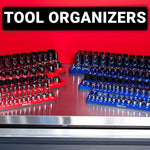
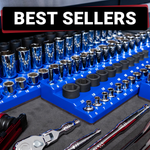
A common setup puts sockets and ratchets up top, especially 1/4-inch and 3/8-inch drive tools. Those are usually the first tools out for teardown and the last tools away after reassembly. Keep them visible and easy to scan. Socket organizers help here because they stop roll-around, make missing sizes obvious, and let you sort by drive size, measurement system, or application.
Wrenches usually belong in a shallow drawer where they can lay flat and stay sorted in size order. If they slide into a pile every time you open the drawer, you lose the whole point of organizing them. A proper wrench organizer keeps them readable and fast to grab.
Pliers and screwdrivers need the same logic. If the drawer turns into a stack, access slows down. Use dividers or dedicated organizers so every handle has a place and every tool returns to the same spot.
Use deep drawers with purpose
Deep drawers are useful, but they become junk zones fast if you do not assign them a job.
They work best for bulky tools, impact sockets, air or cordless accessories, pry bars, hammers, specialty kits, and larger diagnostic equipment. The key is containment. Deep space without structure becomes a pile. Trays, modular inserts, and grid-based systems keep heavier tools from shifting and mixing together.
There is a trade-off here. Overfilling a deep drawer can make it hold more, but it usually makes tools harder to find. Leaving some open space often improves productivity because you can actually see and reach what is inside. A full drawer is not always an efficient drawer.
Labeling is not overkill
A lot of people skip labels because they think they should just remember where everything goes. That works until the box gets busy, the day gets long, or someone else borrows a tool.
Labeling drawers or sections saves time and protects the system. It also makes cleanup faster at the end of the day. You do not need anything fancy. Clear labels for sockets, pliers, electrical, torque, pry bars, and specialty tools are enough to keep the box consistent.
If you share tools with a team, labeling matters even more. A toolbox should not depend on one person’s memory to stay functional.
How to set up toolbox storage for mobile work
If your toolbox lives in a service truck, trailer, or mobile cart, your setup needs more restraint. Movement changes everything.
In a fixed shop box, minor shifting is annoying. In a mobile setup, it can turn organized drawers into a mess by lunch. Use organizers that hold tools in place and avoid loose layouts that rely on gravity alone. Socket rails, wrench racks, foam cutouts, and modular drawer systems make a bigger difference when the box moves between stops.
You also need tighter priority control. Mobile work usually rewards compact, high-coverage tool kits over carrying every specialty item you own. Build your main box around the jobs you can reasonably complete on the road, then stage less common tools separately so they do not clog your everyday space.
Keep specialty tools separate from daily drivers
Specialty tools earn their place, but they should not interfere with your core workflow.
Pullers, compression testers, brake service kits, bearing tools, extractor sets, and one-job adapters should live in their own drawer or in clearly separated modules. That keeps your daily drawers lean and prevents the usual problem where one specialty case eats half the room needed for tools you use every day.
If a specialty tool supports a common job in your bay, keep it accessible. If not, store it lower or farther back. That is the balance. Organize for frequency first, not just ownership.
Maintain the setup or it will fail
The best toolbox system falls apart if you never reset it. Organization is not a one-time project. It is a maintenance habit.
Put tools back in the same spot every time. At the end of the day, do a quick scan for missing pieces, misplaced sockets, and overloaded drawers. Once a month, take ten minutes to fix the drift before it becomes a full teardown again.
This is also the right time to notice what the setup is telling you. If one drawer is always messy, the layout may be wrong. If your most-used tools keep landing on top of the box instead of back in the drawer, they may not be stored in the most efficient spot. Good organization is not rigid. It adjusts to real use.
A toolbox should work like a good bench setup - clean, direct, and ready for the next job. Whether you are running a full-size roller cabinet, a service cart, or a mobile truck setup, the right layout cuts wasted motion and keeps your focus on the repair, not the search. Olsa Tools builds a lot of gear around that exact reality because organized tools are not just easier to look at. They are faster to work with.
Set your box up so the next tool is always where your hand expects it to be. That is when a toolbox stops being storage and starts pulling its weight.