






A messy drawer costs more than it looks. When sockets roll under pliers, wrench sets split up, and you waste two minutes hunting for a 10mm three times a day, that is lost billable time. A good tool organizers comparison is not about making your box look better. It is about speed, control, and keeping your workflow tight.
Most mechanics and serious DIY users do not need more storage. They need better organization inside the storage they already own. That is where the differences between organizer types actually matter. Some systems are built for fast visual access. Some are better for mobile setups. Some protect expensive tools better. And some look good on day one but get old fast when real work starts.
Tool organizers comparison starts with workflow
The biggest mistake is choosing an organizer by category instead of by use. A drawer setup for a fixed service bay does not have the same demands as a mobile cart, road service truck, or home garage that has to do double duty. Before you compare designs, think about how the tools move.
If your tools mostly live in a box and get used hard every day, low-profile drawer systems usually win. They keep everything visible, reduce pileups, and make missing tools obvious. If your tools travel, retention matters more. In that case, organizers that hold tools firmly during transport earn their keep fast.
The second factor is tool mix. Sockets, wrenches, pliers, screwdrivers, and specialty tools all behave differently in storage. One universal organizer sounds convenient, but in practice, category-specific systems are usually faster and cleaner. A socket rail solves a different problem than a wrench rack or a modular drawer grid.
Comparing the main organizer types
Socket rails and socket trays
For mechanics, socket organization is usually the first battle. Rails and trays both solve it, but they do it differently.
Socket rails are strong when you need flexibility. They are easy to move from drawer to cart to work area, and they handle changing sets well. If you add or remove sockets often, rails keep things simple. Vertical or locking styles improve retention, which matters in mobile environments. The trade-off is footprint. Depending on the rail design, they can waste drawer space or make size identification slower if the labeling is weak.
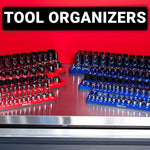
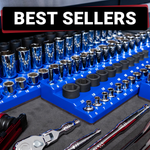
Socket trays are better when speed and visual control come first. A tray with clearly marked sizes gives you instant readout of what is there and what is missing. In a busy shop, that matters. You open the drawer and know the situation immediately. The downside is less flexibility. Trays are more drawer-specific, and they do not always adapt well if your socket collection changes beyond the original layout.
If your box stays put and you want maximum visibility, trays often make more sense. If your tools move around the shop or ride in a truck, rails usually pull ahead.
Wrench organizers
Wrenches create a different kind of mess. They stack badly, slide around, and turn one missing size into a full drawer shuffle. The best wrench organizers hold each wrench in a repeatable position with clear size progression.
Rack-style wrench organizers work well when you want quick grab-and-go access. You can scan the set, pull one wrench, and drop it back in place without fighting the organizer. That is ideal for techs who move fast and do not want a system that slows them down. The weak point is retention. If the drawer slams or the setup gets moved often, some racks hold better than others.
More secure wrench holders are better for carts and service vehicles, but they can be slower during constant use. That is the usual trade-off in any tool organizers comparison - tighter retention versus faster access. There is no perfect answer. There is only the better fit for how you work.
Modular drawer systems
Modular drawer organizers are one of the best options for mixed hand tools. They let you build around the drawer instead of forcing the drawer to adapt to a fixed insert. For pliers, ratchets, pry bars, picks, extensions, and odd-shaped tools, modular systems are hard to beat.
Their biggest strength is control. You decide spacing, grouping, and layout logic. That means you can organize by task, frequency of use, drive size, or tool family. For serious users who care about efficiency, that customization pays off every day.
The catch is setup time. Modular systems ask for more thought upfront. If you rush the layout, you can end up rebuilding it later. They also make the most sense for people who want a permanent, dialed-in drawer. If you constantly rotate tools in and out, a fixed modular layout can feel too rigid.
Still, for technicians who want clean drawers and repeatable placement, this is where organization starts feeling like a real productivity tool, not just storage.
Foam and shadow-style layouts
Foam-style organization has one clear advantage - accountability. Every tool has a home, and missing tools stand out immediately. In environments where tool control matters, that is a major benefit.
It also protects tools well. Less shifting means less banging around, less finish wear, and a cleaner drawer overall. If you have precision tools or specialty pieces you want to protect, foam earns respect fast.
But it is not the most flexible option. Once a layout is cut, change gets harder. If your set evolves, the organizer can become outdated before the tools wear out. Foam also takes planning and works best when your collection is stable.
For a technician with a mature setup who wants exact placement, foam can be excellent. For someone still building a kit, it may lock things down too early.
What matters most in a real tool organizers comparison
Material quality matters, but design matters more. A tough organizer with weak spacing or poor labeling still slows you down. The right comparison should focus on what affects daily use.
Retention is one of the first things to check. If tools slide, tip, or scatter after a normal drawer close, the organizer is not doing enough. At the same time, too much retention can become annoying when you are reaching for the same tool fifty times a day.
Visibility is next. Can you identify sizes at a glance? Can you see what is missing without touching anything? In a busy workflow, that saves more time than people think.
Space efficiency is another big one. Some organizers look organized while actually wasting drawer real estate. This is especially true with bulky designs that separate tools well but eat up valuable width and depth. A better system uses space tightly without crowding your hands.
Then there is adaptability. If you add deep sockets, stubby wrenches, extra extensions, or specialty pliers later, can the organizer still work? The more specialized your work gets, the more this matters.
Choosing the right system for your setup
If you work from a fixed box in a service bay, favor visibility and layout discipline. Socket trays, wrench organizers with clear size order, and modular drawer systems usually make the strongest combination. You want fast drawer reads and repeatable placement.
If you are a mobile mechanic or field tech, lean harder into retention. Rails with secure clips, wrench holders that keep tools planted, and drawer systems that prevent movement will hold up better on the road. A pretty drawer means nothing if it turns into a pile after one drive.
If you are a serious DIY user building a long-term shop, avoid going too universal. It is better to organize your most-used categories well than to buy one catch-all system that handles everything poorly. Start with sockets and wrenches, then build into pliers, ratchets, and specialty tools.
For mixed-use shops, a hybrid setup often works best. Use trays where visual size control matters most, use modular systems for irregular tools, and use higher-retention options where movement is a factor. That kind of setup reflects how real drawers work. Not every tool category needs the same answer.
Where people get it wrong
A lot of frustration starts with overbuying the wrong organizer style. People fill drawers with bulky holders, then realize they lost capacity. Or they choose a highly secure system in a stationary box and get tired of fighting it all day.
Another mistake is organizing around what looks clean instead of what works fast. Clean matters, but speed matters more. If the system adds friction, the drawer will slowly fall apart because nobody wants to maintain it.
The smarter move is to build around repetition. Put high-frequency tools where your hand goes first. Group tools by actual jobs, not just by category. And leave enough room for growth so the system still works six months from now.
Brands like Olsa Tools have pushed this category forward by focusing on mechanic-specific organization instead of generic storage. That shift matters because the best organizers are not just containers. They are workflow tools.
A solid organizer should make the next job easier before you even pick up the tool. If your drawer opens and the right size is exactly where it should be, you chose well. If not, keep adjusting until the setup works for the way you actually turn wrenches.