






That missing 10mm never disappears at a convenient time. It vanishes when a bay is full, a customer is waiting, or you're halfway through a job and already behind. That is exactly why socket organizers matter. They do more than clean up a drawer - they protect your workflow, cut wasted motion, and make every socket set easier to use under real shop pressure.
A lot of tool storage gets judged by how it looks when the drawer is open. Mechanics know better. The right organizer earns its keep when you're moving fast, switching between metric and SAE, grabbing deep and shallow sockets back to back, or loading tools for mobile work. If it slows you down, tips over, hides sizes, or forces you to fight the tray just to pull a socket, it is not helping.
Why socket organizers matter more than people admit
A cluttered socket drawer costs time in small chunks. A few seconds hunting for a size here, another few seconds checking whether a socket is missing there, and more time putting tools back wherever they fit. Across a week, that adds up. Across a year, it becomes one of those shop problems people accept even though they should not.
Good socket organizers solve a practical problem, not a cosmetic one. They create a fixed home for every socket, which means faster tool selection, easier inventory checks, and less wear from sockets banging into each other in a pile. In a busy garage, that matters. In a service truck or mobile setup, it matters even more because movement exposes every weak point in your storage.
There is also a discipline side to it. When every socket has a marked position, you notice missing tools immediately. That means fewer surprises on the next job and fewer incomplete sets hiding in the back of a drawer.
What separates good socket organizers from bad ones
Not all organizers improve workflow. Some look tidy for product photos but fall short once they meet grease, vibration, and daily use. The difference usually comes down to retention, visibility, durability, and fit.
Retention is the first thing to get right. If sockets fall off when you carry the organizer or open a drawer hard, that is a problem. On the other hand, if retention is too aggressive, you waste time yanking sockets loose. The best setups strike a middle ground. Sockets stay put when they should, but come off without a fight.
Visibility matters just as much. Size markings should be easy to read, and the layout should make sense at a glance. If metric and SAE are mixed too closely, or if deep and shallow sockets are hard to separate visually, mistakes happen. In a fast-paced environment, clear labeling beats guesswork every time.
Durability is non-negotiable. Organizers live in drawers, carts, and trucks where they get slammed, bumped, exposed to oil, and handled with dirty hands. A flimsy design might hold up in a hobby setup, but professional users need something that can take abuse without cracking, warping, or losing function.
Fit is where preferences start to split. Some mechanics want compact storage to maximize drawer space. Others will trade a little space for faster access and clearer spacing. Neither approach is wrong. It depends on how you work, how much room you have, and whether your tools stay in one box or travel with you.
Choosing socket organizers for your workflow
The best organizer is not the one with the most features. It is the one that matches the way you actually work.
If you are in a fixed shop with a full tool box, drawer-based organization usually makes the most sense. You want fast top-down visibility, stable layout, and an arrangement that supports repetition. When the same sockets go back to the same spots every day, your hands start finding tools without much thought.
If you work out of a cart or service vehicle, portability becomes a bigger factor. In that case, socket organizers with stronger retention and secure transport are worth prioritizing. A neat drawer does not help much if everything scatters the first time you hit a rough road or move between jobs.
If you routinely switch between impact and chrome sockets, keep that in mind too. Impact sockets are bulkier, and not every organizer handles them equally well. The same goes for deep sockets, swivels, and specialty pieces. A setup that works perfectly for a basic chrome set may feel cramped once you start adding larger drive sizes or heavy-wall sockets.
Rails, trays, and modular systems
There is no single best format for everyone, because each style solves a different problem.
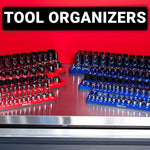
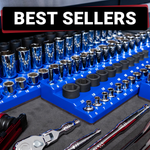
Socket rails are a strong choice when flexibility and portability matter. They are easy to move, simple to reconfigure, and useful for carrying a selected range of sockets to the job. They can be especially effective for mobile mechanics or anyone who wants to separate sets by drive size, application, or job type. The trade-off is that some rail setups are not as glance-friendly inside a packed drawer as a well-laid-out tray.
Socket trays are built for visibility and order. They make it easy to see missing sizes immediately and keep your drawer layout consistent. For technicians who work from the same box every day, trays often feel faster because the layout is fixed and readable. The downside is that trays usually take up more dedicated space and are less convenient when you want to move a set from one location to another.
Modular systems make sense when you are building a broader organization setup across multiple tool categories. They can create a cleaner, more controlled drawer environment and let you scale your storage over time. That said, modular systems work best when you are willing to plan your layout instead of just dropping tools wherever there is room.
The details that make a difference every day
A good organizer should support speed without creating new friction. That sounds obvious, but small design choices decide whether a product gets used or ignored.
Size markings should stay readable, not wear off quickly or disappear under normal shop grime. Spacing should allow you to grab sockets with work gloves or dirty hands. The base should sit stable in a drawer instead of sliding around every time you open it. If a design saves space by making access harder, that trade-off may not be worth it.
Drive size separation also matters. When 1/4-inch, 3/8-inch, and 1/2-inch sockets all live in a confusing arrangement, the drawer might still look organized while your workflow stays slow. A better setup gives each category a clear place and keeps the logic simple.
There is also the question of expansion. Most tool collections do not stay frozen. You add impact sockets, pickup duplicates of your most-used sizes, or build out more specialty coverage over time. Socket organizers should leave room for growth or at least make reorganization easy when your setup changes.
Organization is really about speed and control
Mechanics do not buy organizers because they want prettier drawers. They buy them because wasted motion is expensive. Reaching, searching, checking, and rechecking all eat into productive time. That is true in a professional shop, on roadside service calls, and in a home garage where free time is limited and frustration adds up fast.
The right setup gives you more control over your workday. You can spot missing sockets before a job starts. You can reset your box faster at the end of the day. You can grab exactly what you need without digging through a pile of steel. That control is what makes organization worth paying attention to.
At Olsa Tools, that is the standard worth chasing - storage that works as hard as the tools it holds. Built tough, easy to trust, and designed around real mechanic workflow.
If your socket drawer still makes you hunt, guess, or dig, that is not normal wear and tear. That is a fixable problem, and the right organizer solves it every time you open the box.