







A mobile setup gets exposed fast. One hard brake job on gravel, one roadside battery replacement in the rain, or one packed schedule with five stops before lunch will show every weakness in your storage system. Good mobile mechanic tool storage is not about stuffing more tools into a truck or van. It is about getting the right tools in reach, keeping them protected, and cutting wasted motion out of every service call.
For mobile mechanics, storage is workflow. If your sockets slide loose, your pry bars end up under a tote, and your test gear gets buried behind bulky cases, you lose time on every job. That lost time adds up to fewer tickets closed, more frustration, and more wear on tools that should last years.
What mobile mechanic tool storage has to do better
A shop box can be heavy, wide, and packed deep because it stays in one place. A mobile setup does not get that luxury. It has to survive movement, vibration, weather swings, uneven parking, and constant loading and unloading. That changes the standard.
The best storage for a mobile mechanic does three jobs at once. It secures tools in transit, gives fast access at the jobsite, and makes inventory obvious at a glance. If one of those pieces is missing, the whole setup starts costing you time.
There is also a trade-off most people learn the hard way. More storage space is not always better. If extra room lets tools migrate, pile up, or hide behind each other, your van gets less efficient even though it looks more capable. Tight organization usually beats raw capacity.
Start with job frequency, not tool count
A lot of mobile mechanics build storage backward. They start by asking how to carry everything, then wonder why the vehicle feels cluttered and slow. The better question is which tools earn permanent space because they get used every day.
Your core kit usually includes ratchets, sockets, wrenches, pliers, screwdrivers, torque tools, electrical diagnostics, lighting, and a short list of high-use specialty items. Those should live in fixed locations that never change. If you have to think about where a 10mm socket set or trim tool is, the storage plan is already failing.
Lower-frequency tools deserve a different strategy. Keep them organized, but store them deeper or in dedicated cases based on service type. That might mean one electrical case, one brake service case, and one driveline or suspension module. Modular storage works well in mobile service because it keeps the main layout clean while still letting you expand for specific jobs.
The best mobile mechanic tool storage layout is zone-based
In a mobile rig, mixed storage creates chaos. A drawer with sockets, wire strippers, gloves, picks, and a random scan tool cable may hold a lot, but it slows every task down. Zone-based organization fixes that.
Set up your vehicle in work zones. Fastener tools go together. Diagnostic gear gets its own section. Pliers and cutting tools stay grouped. Torque tools should be stored where they are protected from impact and easy to grab when final assembly starts. Consumables like terminals, tape, zip ties, and gloves should sit near electrical tools, not buried on the opposite side of the vehicle.
This sounds simple, but it changes the pace of a job. When every category has a home, your brain stops searching and starts working. That matters even more in mobile service, where distractions are constant and the work environment is rarely ideal.
Drawers, rails, trays, and organizers all have a role
No single format solves everything. Drawers are great for protected storage and clean categories, but deep drawers can turn into junk zones if they are not divided properly. Open shelving gives quick access, but it needs retention so cases and tools do not shift in transit. Portable trays are useful for carrying task-specific tools to the vehicle you are servicing, especially when parking position forces you to work away from your rig.
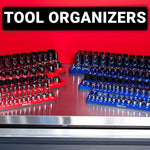
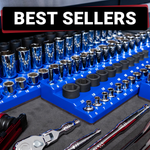
Organizers do the heavy lifting. Socket organizers keep sizes visible and stop pieces from scattering. Wrench organizers reduce overlap and make missing tools obvious right away. Grid and drawer systems help lock layouts in place so tools stay where they belong after a full day of driving. For mobile work, retention matters just as much as storage density.
Protect movement-sensitive tools first
Every mobile mechanic has a few tools that cost more than the rest of the drawer combined. Scan tools, torque wrenches, specialty meters, work lights, and precision measurement gear should never ride loose. Vibration wears tools out faster than most people realize, and impact damage often starts long before something fully breaks.
Store precision tools in fitted spaces where they cannot slide or bang into steel. Use dividers, foam, fitted trays, or purpose-built drawer systems where it makes sense. This is one place where being disciplined pays off. Tossing a torque wrench into a mixed drawer might save ten seconds now and cost you accuracy later.
You also need to think about environment. Mobile rigs deal with heat, cold, moisture, and dust. Electrical test tools and batteries should stay in cleaner, drier sections of the vehicle. If your setup includes exterior access or frequent door-open exposure, place the most sensitive gear farther inside.
Visibility beats stacking
Stacked storage looks efficient until you need the bottom item in a rush. Then you are unloading three cases to reach one tool, and the whole system starts working against you. For mobile mechanics, visibility is the real productivity feature.
If you can see a tool, you can confirm it is there, grab it faster, and put it back correctly. That is why labeled positions, organized rails, and shallow divided drawers outperform big catch-all bins. Dense storage is fine. Blind storage is not.
This is especially true for sockets, wrenches, bits, and impact accessories. These tools get used constantly and are easy to misplace. A clear organizational system saves small chunks of time all day long. Over a week, that is real money.
Build around the way you actually work
A strong mobile mechanic tool storage plan should match your service mix. If you do a lot of diagnostics, electrical access and test equipment deserve prime real estate. If your work leans into brakes, suspension, and mechanical repairs, your layout should favor sockets, torque tools, breaker bars, and impact accessories.
Hand dominance matters too. So does entry point. A right-handed tech who usually works from the side door should not have high-use tools stored deep at the rear just because the layout looked clean on day one. The best setups reduce steps, reaches, and awkward lifting.
It is worth reviewing your own patterns after a few weeks. Which drawer gets opened the most? Which tools never seem to make it back to their original place? Where does clutter build up first? Those friction points tell you what needs to move.
Keep a reset routine
Even the best storage system drifts if you do not maintain it. Mobile work is fast, and end-of-day fatigue makes it easy to toss tools wherever they fit. The fix is not complicated. You need a reset routine that takes a few minutes and happens every day.
Check your core organizers, refill consumables, wipe down sensitive gear, and return specialty tools to their assigned spots. This keeps your next call from starting behind schedule. It also helps you catch missing tools before they disappear for good.
A good storage system should make reset easy. If putting tools back feels annoying, the layout needs work. That is usually a sign the home location is too cramped, too far away, or not specific enough.
Don’t confuse tough-looking with job-ready
A lot of storage products look durable. Not all of them are built for daily field use. Mobile service exposes weak latches, poor retention, thin plastic, and layouts that only work on a bench. What matters is not how clean the setup looks in a photo. It is whether it holds up after rough roads, repetitive use, and real repair volume.
That is why mechanic-focused organization matters. Purpose-built socket organizers, wrench racks, drawer systems, and modular layouts outperform generic storage because they are designed around actual tool shapes and mechanic workflow. Olsa Tools has built a strong following on exactly that idea - organization that saves time, protects tools, and holds up under real use.
A reliable setup should feel boring in the best way. You should not have to think about whether tools shifted, whether a tray popped loose, or whether your most-used kit is buried again. It should just work.
When to simplify your setup
If your vehicle is full but you are still digging, your answer is probably not more storage. It is less clutter and better assignment. Trim duplicates you do not use, remove dead-weight specialty tools from the daily rig, and tighten up categories that have gone loose.
A leaner setup often performs better because it reduces decision fatigue. You get in, grab what you need, and get to work. For a mobile mechanic, that speed is part of the service.
The best storage system is not the one that carries everything. It is the one that helps you finish the job clean, fast, and without hunting for the tool that should have been in your hand already.