









You feel bad tool storage before you even think about it. The 10 mm is missing again, the pry bar is buried under extensions, and one messy drawer turns a two-minute job into ten. A solid mechanic tool storage guide is really about one thing - protecting your time. When every tool has a home, your workflow gets faster, your tools last longer, and the whole bay runs smoother.
What a mechanic tool storage guide should actually solve
Most storage advice misses the point because it treats organization like housekeeping. In a working garage, storage is not about making drawers look pretty. It is about reducing motion, preventing loss, and keeping your most-used tools ready under pressure.
That changes how you set things up. You are not organizing by what seems neat at first glance. You are organizing by frequency of use, job type, tool size, and how your hands actually move during a repair. The best storage system supports your workflow without forcing you to think about it.
If you are a professional mechanic, downtime is expensive. If you are a serious DIYer, frustration is what kills momentum. In both cases, bad storage adds drag to every task. Good storage removes it.
Start with how you work, not just what you own
Before you buy another box, tray, or organizer, pay attention to your routine for a week. Which tools come out every day? Which ones stay in the drawer but need to be easy to find when they do matter? Which tools travel with you, and which ones should stay parked at the main box?
That first step matters because not every mechanic needs the same storage layout. A mobile tech needs retention and portability. A dealership tech may prioritize speed and drawer access. A home garage setup may need to maximize a smaller footprint while still keeping sockets, wrenches, pliers, and torque tools separated and protected.
Storage works best when it follows the job. Your core hand tools should live in the most accessible spaces. Specialty tools can move out to secondary drawers or modular storage zones. Consumables and accessories should never crowd out the tools you touch twenty times a day.
Build your layout around tool families
A practical mechanic tool storage guide starts with categories that make sense under real shop conditions. Sockets should stay with sockets, but that is only the beginning. You want clear separation between drive sizes, metric and SAE, deep and shallow, chrome and impact. The less your brain has to sort in the moment, the faster you work.
The same goes for wrenches. If you mix combination, ratcheting, stubby, and flare nut wrenches in one loose pile, you are creating delay every time you reach in. Organizers that hold each wrench in size order make the right tool obvious at a glance.
Pliers, screwdrivers, pry bars, and picks need their own logic too. These are often the tools that get tossed in wherever there is space left. That is where clutter starts. Give them fixed zones and keep those zones consistent. Once you break the habit of random placement, staying organized gets much easier.
The top drawer should earn its space
The top drawer is premium real estate. Fill it with your highest-frequency tools, not your biggest tools. Ratchets, common sockets, favorite pliers, key screwdrivers, bit sockets, and the tools that solve 80 percent of daily jobs belong where your hand lands first.
Heavy or less frequently used items can move lower. That includes larger pullers, specialty diagnostic tools, bulky impact accessories, and duplicate tools. You want the upper drawers fast and light, not crowded and overbuilt.
Size order is not optional
If your sockets or wrenches are not stored in sequence, you are wasting time every day. Size order is one of the simplest upgrades you can make, and it pays off immediately. Missing sizes stand out faster, inventory checks get easier, and cleanup after a job takes less effort.
That is why purpose-built organizers matter. They do more than hold tools. They create visual control. When one empty spot shows up, you know exactly what is gone.
Choose storage that matches the tool and the environment
Not every tool belongs in the same kind of organizer. A drawer full of loose sockets is inefficient, but the wrong organizer can also slow you down. It depends on whether your priority is portability, quick identification, drawer density, or secure retention.
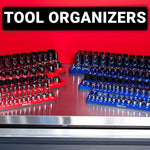
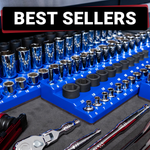
Socket rails are strong for transport and quick access, especially when you need to carry sets between jobs. Trays and drawer organizers make more sense when you want a clean top-down view in a service cart or main box. Grid-based drawer systems work well when you want to lock in a custom layout for mixed tool types and stop drawer creep from ruining your setup.
Wrench organizers should keep sizes visible and stable. Vertical styles save space, while low-profile drawer formats can speed up selection in tighter boxes. For pliers and screwdrivers, the right holder depends on whether you prefer upright access or laid-out drawer organization.
There is no perfect universal answer. A mobile setup may need stronger retention. A dedicated shop box may benefit more from visibility and density. Good storage is about fit, not hype.
Protect your drawers from becoming junk zones
Every toolbox has one problem drawer. It starts with adapters, picks, test leads, and small accessories that do not have a dedicated home yet. Then it turns into a catch-all that slows down the entire box.
Fix that early. Small parts need boundaries. Use compact organizers, segmented trays, or dedicated sections for items like extensions, swivels, hex bits, trim tools, and electrical test gear. The rule is simple - if a tool comes out often enough to matter, it deserves a defined location.
This is also where labels can help, especially in shared workspaces or high-traffic environments. You do not need a fancy system. Clear, consistent placement does most of the work. But when several people touch the same storage, labels remove guesswork.
Clean storage is faster storage
Mechanics do not need a lecture on cleanliness. They need a setup that still works after oil, dirt, brake dust, and constant use. That means your storage system should be easy to wipe down, easy to reset, and tough enough to hold shape over time.
Soft organizational habits fail when the shop gets busy. Physical systems hold up better. When tools lock into place, slide into marked positions, or sit in fitted spaces, cleanup becomes automatic. That is the difference between a storage idea and a storage system.
A good reset habit at the end of the job matters too. Not because it looks nice, but because tomorrow starts faster when tonight ends in order. Thirty seconds of reset time beats five minutes of searching on the next repair.
Plan for growth without letting clutter win
Most tool collections do not stay the same for long. New jobs demand new sizes, new access tools, new torque equipment, and more specialty pieces. If your storage is already maxed out, every new tool creates chaos.
Leave room where it makes sense. That could mean extra positions on a socket organizer, open sections in a modular drawer layout, or a separate drawer reserved for tools you are adding over time. Expansion space keeps your core layout intact.
At the same time, do not keep every duplicate in your primary box. If you have backup tools, seasonal tools, or rarely used specialty items, move them to secondary storage. Your main working setup should stay lean. Faster boxes are usually not the fullest ones.
The best mechanic tool storage guide is the one you will maintain
A storage system can look sharp on day one and still fail by the end of the month if it fights your habits. That is why the best setup is not always the most complex one. It is the one that makes putting tools back easier than tossing them down.
For some mechanics, that means rails and trays arranged by job flow. For others, it means a drawer grid that keeps every tool fixed in place. Brands that focus on mechanic-specific organization, including Olsa Tools, understand that storage is not separate from productivity. It is part of the job.
If your current box slows you down, start with one drawer. Fix the sockets. Then fix the wrenches. Then clean up the problem zone that keeps eating small tools. You do not need to rebuild the whole setup overnight. You just need a system that respects your time every time you open the drawer.