







A messy wrench drawer costs more than patience. It costs minutes on every job, busted momentum, and that familiar irritation of digging past three wrong sizes before you find the one you need. If you're figuring out how to organize wrench drawers, the goal is simple - make every wrench visible, reachable, and easy to put back without thinking twice.
That matters whether you're working in a dealership bay, running service calls, or keeping a home garage tight and efficient. Good drawer organization is not about making a toolbox look pretty for five minutes. It's about building a layout that holds up through real work, long days, and repeat use.
How to organize wrench drawers for speed
The best wrench drawer setup starts with one decision: organize for how you work, not for how a catalog photo looks. A clean layout that slows you down is still a bad layout. The right system lets you spot the wrench you need at a glance, confirms when one is missing, and gives each piece a home that makes sense at the end of the job.
Most mechanics do best with one primary sort method and one secondary sort method. Primary usually means measurement system - SAE and metric stay separate. Secondary usually means size order, wrench style, or frequency of use. When you mix all three at once without a plan, the drawer gets crowded fast.
If you use combination wrenches constantly, they should get prime space. If ratcheting wrenches only come out for certain work, they can live in a neighboring drawer or a separate section. The same logic applies to stubby, flex-head, offset, flare nut, and specialty sets. Group by function first, then line them up by size.
Start by emptying the drawer completely
You cannot fix a bad layout by shuffling tools around a half-full drawer. Pull everything out. Wipe down the drawer. Clear the lint, metal dust, and old labels. Then sort your wrenches on the bench into clean groups.
At this stage, you'll usually find three problems. First, duplicate sizes are taking up valuable room. Second, oddball pieces from incomplete sets are mixed into daily-use tools. Third, the drawer has become a catch-all for other hand tools that do not belong there.
Be honest about what needs to stay in that drawer. Daily-use wrench sets earn drawer space. Backup pieces, damaged tools, and low-use specialty items may need to move elsewhere. A drawer that is too full will never stay organized for long.
Separate by system, then by style
Mixing metric and SAE in the same run is one of the fastest ways to waste time. Even if you know your tools well, your hand will hesitate for a beat when both systems sit side by side. Split them clearly.
Within each system, sort by wrench type. Keep combination wrenches together, ratcheting wrenches together, stubby wrenches together, and flare nut or specialty pieces in their own zone. That may mean one drawer for standard combination wrenches and another for specialty sets. If drawer space is tight, divide a single drawer into clearly defined sections.
This is where a lot of setups go wrong. People try to stack unlike tools in the same row because they fit physically, but the workflow suffers. A 10 mm combination wrench should not be buried under a flex-head ratcheting wrench just because both happen to be 10 mm.
Put sizes in a fixed left-to-right order
Once your groups are set, arrange each set in a consistent direction. Small to large from left to right is the most common because it reads naturally and makes missing sizes obvious. Some techs prefer top to bottom if the drawer is deep and narrow. Either can work. What matters is consistency.
Leave enough room to grab each wrench without lifting two others with it. Tight spacing saves space in the short term but creates daily friction. If your fingers cannot pull a wrench cleanly, the drawer is overpacked or the organizer is wrong for the set.
A fixed order also helps when you're putting tools back during a rushed cleanup. You do not need to read every size marking if the visual pattern is already familiar. The gap tells you where the wrench belongs.
Use wrench organizers instead of loose stacking
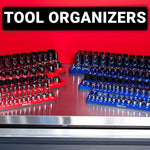
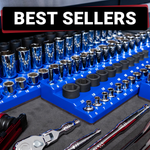
Loose stacking is cheap, fast, and almost always temporary. The first rough drawer slam turns neat rows into a pile. If you want a layout that survives actual work, use a dedicated wrench organizer or a fitted drawer organization system.
Wrench organizers help in two ways. They keep each tool separated so sizes stay visible, and they reduce the sideways shifting that happens when drawers open and close all day. For many mechanics, that alone cuts down tool hunting more than any labeling trick.
The best style depends on your drawer depth, wrench length, and how often you add or remove tools. Some organizers hold wrenches upright at an angle for quick identification. Others keep them flatter and denser for lower-profile drawers. There is a trade-off. Upright visibility is faster, but flat layouts can fit more tools in less vertical space.
If you run a full organization system across the box, make sure the wrench drawer still supports quick access. A rigid, modular setup can be excellent when your inventory is stable. If you swap tools in and out often, leave yourself a little flexibility rather than boxing every space too tightly.
Build the drawer around your most-used sizes
Not every wrench deserves equal real estate. In most shops, a handful of sizes do most of the work. Those high-use sizes should sit where your hand lands first, usually near the front center of the drawer or in the most natural reach path.
That does not mean breaking size order completely. It means choosing the best drawer position for the sets you use most. If standard combination metric wrenches are your everyday workhorses, they belong in the premium spot. Less-used SAE or specialty sets can shift to the side, rear, or a second drawer.
This is one of those it-depends decisions. A mobile mechanic may prioritize compact density because truck space is limited. A shop tech with a larger box may value wider spacing and faster visual scanning. Both approaches are valid if the drawer matches the job.
Label only where it adds speed
Labeling can help, but too much labeling becomes visual noise. You do not need a giant label on every slot if the wrench sizes are already stamped clearly and the order is obvious. Use labels where they solve a real problem.
Good examples include marking sections for Metric Combination, SAE Combination, Ratcheting, and Stubby. If multiple techs use the same box, section labels become more valuable because they help tools get returned to the right zone. If it is your personal box and you know your layout cold, labels may only be needed for specialty sections.
Keep labels durable and easy to read. If they peel, smear, or clutter the drawer, they stop helping.
Plan for missing tools and future additions
A strong wrench drawer makes missing pieces obvious. That is one reason fixed-position organization works so well. An empty spot stands out immediately, which means you catch missing tools before they disappear for days.
At the same time, leave some room for growth. If you buy a new ratcheting set or add a specialty wrench style later, a completely maxed-out drawer gives you nowhere to put it. A little unused space is not wasted space if it keeps the system from collapsing the next time your kit expands.
Olsa Tools leans hard into this idea for a reason. Real organization is not just storage. It is workflow control. If the system helps you grab faster, reset faster, and spot missing tools sooner, it is doing its job.
Keep the drawer organized after the reset
The hard part is not setting up the drawer. The hard part is keeping it that way after a long week. The fix is to make the right behavior easier than the lazy one.
That means every wrench needs an obvious home. The drawer should not be so packed that returning tools feels like a puzzle. It also helps to do quick resets instead of waiting for a total disaster. Thirty seconds at the end of the day beats twenty minutes of rework on Friday.
If your drawer keeps falling apart, do not blame yourself first. Blame the layout. Usually the issue is one of three things: mixed wrench types in the same row, not enough separation, or trying to fit too many tools into one drawer. Adjust the system until it works under pressure, not just when you have extra time.
The best wrench drawer is the one that stays organized on your busiest day. Set it up for speed, keep it honest, and let the layout do some of the work for you.