






A loose pile of sockets in a drawer costs more than a few seconds. It slows every job, hides missing sizes, and turns a simple grab into a search. If you're trying to find the best socket holder for toolbox use, the right answer comes down to how you work, where you store your tools, and how much abuse your setup takes in a real shop or mobile service rig.
This is one of those purchases that looks simple until you live with the wrong one. A holder can seem fine on day one, then start dropping sockets, wasting drawer space, or fighting you every time you need a size change. Good socket organization should speed you up, protect your investment, and make your box feel like it was set up by someone who actually turns wrenches.
What makes the best socket holder for toolbox use?
The best setup does three things well. It keeps sockets secure when the drawer opens and closes hard, it lets you identify sizes fast, and it fits the way your toolbox is actually laid out.
That sounds obvious, but plenty of holders only get one or two of those right. Some have strong retention but make socket removal annoying. Others are easy to load and unload but let sockets tip over or slide around. The best choice is the one that balances retention and speed without wasting space.
For most mechanics and serious DIY users, that balance starts with asking a few practical questions. Are your sockets mostly chrome or impact? Deep, shallow, or both? Do you store them in shallow drawers, carry them to the job, or move between a service truck and a roll cart? Those details matter more than marketing claims.
The main socket holder styles and where they work best
Socket holders generally fall into a few useful categories, and each one has trade-offs.
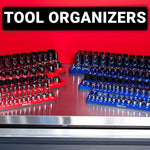
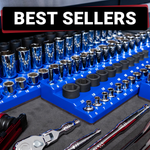
Rail-style organizers are a strong fit for a lot of toolbox drawers. They keep sockets lined up, are easy to reconfigure, and make it simple to separate drive sizes. If you want a clean row of 1/4-inch, 3/8-inch, and 1/2-inch sockets with quick visual access, rails do the job well. The catch is retention quality varies. A weak clip system gets old fast when drawers slam shut or tools move in transport.
Tray organizers are better when you want every socket to have a dedicated home with clear size markings. They shine in fixed drawer layouts because they make missing sockets obvious at a glance. The trade-off is flexibility. If your set changes often or you mix brands and wall thicknesses, a molded tray can feel restrictive.
Magnetic holders work well for drawers and carts where you want sockets to stay planted. They can be especially useful in mobile setups because they resist shifting. But magnet strength, drawer liner thickness, and socket weight all affect performance. Heavy impact sockets can expose a weak magnetic design in a hurry.
Vertical or peg-style holders are compact and can store a lot in a small footprint. They are useful when drawer depth is limited but vertical space is available. The downside is visibility. If sizes are buried or packed too tightly, speed drops.
No single style wins every time. The best socket holder for toolbox drawers in a busy shop may not be the best one for a service van or a home garage cart.
Drawer storage versus grab-and-go use
If your sockets live in a drawer all day, low-profile organization and clear sizing usually matter most. You want smooth drawer operation, no tipping, and no wasted height.
If you regularly carry sockets to the vehicle or move them between workstations, retention moves to the top of the list. A holder that keeps sockets secure while being moved is worth more than one that just looks tidy in a static drawer.
That is where many buyers get it wrong. They buy for appearance first, then get frustrated when the organizer does not match the way they work.
Retention matters more than most people think
A socket holder is only as good as its ability to hold under real conditions. That means vibration, drawer impacts, oil residue, dirty hands, and fast-paced use.
Retention should feel secure without forcing you into a two-handed fight every time you pull a socket. If the post or clip grips too lightly, sockets rattle loose. If it grips too hard, the organizer slows you down. The sweet spot is firm but fast.
This is especially important for mobile mechanics and field service techs. In a controlled garage, a minor shift in the drawer is annoying. On the road, weak retention can turn into mixed sizes, damaged finishes, and wasted time before the job even starts.
Material also plays a role here. Plastic can work well if it is built for shop use and not brittle under stress. Metal rails add strength and stability, especially for heavier sockets. Magnetic systems need real holding power, not just enough to pass a bench test.
Sizing visibility is where workflow gets faster
The right holder should reduce hesitation. You open the drawer, spot the size, grab it, and keep moving.
That means size markings need to stay readable. Laser-etched labels, molded markings, or clearly separated rows all help. If you have to squint, lift sockets to read sizes, or remember a layout that makes sense only when the drawer is full, the organizer is working against you.
Metric and SAE separation matters too. Mixed storage might save a little room, but it usually costs time. The same goes for mixing shallow and deep sockets without a clear system. If your holder helps you spot gaps instantly, it does more than keep the drawer clean. It protects the rhythm of the job.
Fit is not just about dimensions
A lot of people measure drawer width and stop there. That is only part of the story.
The best socket holder for toolbox organization also has to fit your socket set profile. Thin-wall chrome sockets, bulky impact sockets, extra-deep sockets, and specialty pieces all place different demands on spacing and post height. A holder that fits standard chrome sockets perfectly may feel cramped with impact sets.
Expansion matters as well. If your collection grows, can the system grow with it? Modular holders and adjustable rails are usually the safer long-term choice for technicians who add tools over time. Fixed trays are excellent when your set is locked in and standardized.
This is one area where serious users usually appreciate system-based organization. When organizers are designed to work together across drawers and tool categories, the whole box gets easier to manage.
Durability is not optional in a working toolbox
Toolbox organizers do not get a free pass just because they are not the tool doing the turning. They still take abuse.
They get loaded and unloaded constantly. They get hit with dirt, grease, brake dust, and temperature swings. Drawer organizers also deal with repeated impact every time the drawer opens and shuts. Cheap materials show their weakness here fast - cracked posts, sloppy fit, fading labels, and rails that no longer sit straight.
A good holder should keep its structure, maintain retention, and stay readable over time. If it cannot survive daily use, it is not helping your workflow. It is just another replacement item.
That is why many mechanics lean toward organization products built specifically around shop use rather than generic storage. Olsa Tools has built a strong reputation around this exact problem - making organizers that hold up in real-world work, not just on a clean shelf.
When to choose rails, trays, or magnetic holders
If you want the shortest answer, here it is.
Choose rails when you want flexibility, modular layout, and easy drive-size separation. They are a strong all-around choice for most toolbox drawers.
Choose trays when visual control matters most and your socket set is consistent. They are excellent for knowing immediately what is missing.
Choose magnetic holders when movement is part of the job and you want extra stability in drawers or on carts.
Still, there is no perfect holder in the abstract. A heavy impact set in a mobile rig has different demands than a chrome set in a home box. The best choice is always tied to the job.
How to tell you picked the right one
You will notice it within a week. Your drawer opens cleaner. Missing sockets stand out. You stop digging. You stop second-guessing where a size should be. The organizer fades into the background because it is doing its job.
That is the real standard. Not flashy design. Not packed-out marketing language. Just faster work with less friction.
If you are choosing a socket holder for a toolbox that gets used hard, buy for retention, visibility, and fit before anything else. A clean drawer is nice. A faster workflow is better. And when your organization holds up day after day, every job starts a little sharper.