






The fastest way to waste money in a shop is buying tools before you know how you actually work. Ask ten techs what tools do mechanics need, and you’ll hear some overlap, plus a lot of strong opinions. That’s because the right setup depends on the jobs you do every day, the vehicles you touch most, and how much time you lose to bad organization.
Still, there is a core tool kit every mechanic should have. If you’re building from scratch or tightening up a scattered setup, the goal is simple - cover the jobs you see constantly, buy for durability, and organize everything so you can grab it without thinking.
What tools do mechanics need first?
Start with the tools that handle basic service, diagnosis support, and common tear-down work. You do not need every specialty item on day one. You need the tools that earn their keep every shift.
A solid foundation starts with ratchets and socket sets in the common drive sizes. For most mechanics, that means 1/4-inch, 3/8-inch, and 1/2-inch drive. You’ll want a good spread of shallow and deep sockets, both SAE and metric if you work across different vehicles and equipment. Skipping one size range always seems cheaper until the first stuck fastener turns into a delay.
Wrenches come next. Combination wrench sets cover a huge amount of daily work, especially in spots where a socket and ratchet won’t fit. Stubby and long-pattern options are useful, but standard lengths should be your starting point. If you do engine work or suspension jobs often, you’ll find out quickly where your set needs to grow.
Pliers matter more than many new mechanics expect. Slip joint, needle nose, groove joint, and cutting pliers all pull their weight. Retaining ring pliers can also be essential depending on the work. The point is not to collect every variation. The point is to have dependable pliers that grip cleanly, cut reliably, and do not flex when you lean on them.
Screwdrivers and bit drivers are another basic category, but this is where cheap tools create a lot of frustration. Worn tips strip hardware. Weak handles cost control. A mechanic needs a dependable set of Phillips, slotted, Torx, and hex-driving options because modern vehicles use all of it.
The hand tools that carry the workload
When people ask what tools do mechanics need, they usually picture sockets and wrenches first, and for good reason. Hand tools carry the majority of day-to-day work. But the best setup is not just broad. It is balanced.
Torque tools are part of that balance. A torque wrench is not a luxury item for precision work only. It is a required tool for wheel service, engine work, and any job where fastener load matters. If you are guessing on torque, you are gambling with comebacks.
Breaker bars and pry bars also deserve a place in the core kit. A ratchet is not a breaker bar, and forcing it to do that job is how tools get damaged. Pry bars help with alignment, separation, and stubborn assemblies in ways that save both time and knuckles.
Hammers and punches round out the category. A mechanic usually needs a dead blow, a ball peen, and a basic punch and chisel set. These are not glamorous tools, but they solve real problems fast when parts are seized, pins are frozen, or surfaces need persuasion.
A dependable inspection light belongs in the same conversation. Good lighting changes how fast and how accurately you work. You can have the right tool in your hand and still lose time if you cannot clearly see the fastener, clip, or leak source.
Specialty tools depend on the work you actually do
This is where discipline matters. Specialty tools save time, but they can also eat your budget if you buy ahead of your workload.
If you handle a lot of brake work, certain caliper, piston, and bleeding tools quickly become worthwhile. If you spend your days on front-end and suspension jobs, pullers, separator tools, and larger impact accessories start moving up the list. If you do engine diagnostics and repair, your tool needs shift toward precision access, timing support, and tighter torque control.
The mistake is buying for rare jobs before you’re fully covered on daily jobs. A specialty tool that sits in a drawer for six months is less useful than a second ratchet that saves time every day. Build your kit around frequency first, then difficulty.
Tool organization is not optional
A lot of mechanics think of organization as something to worry about after they have enough tools. That is backward. Organization should start early, because every extra minute spent hunting for a socket, wrench, or bit is a direct hit to productivity.
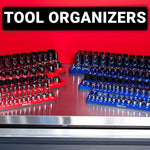
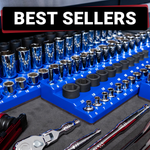
Socket organizers, wrench organizers, plier racks, and drawer systems are not cosmetic upgrades. They reduce wasted motion, prevent missing pieces, and make it obvious when a tool is out of place. In a busy shop or mobile setup, that matters. Fast access keeps your pace up. Visual control keeps your tool count honest.
There is also a durability angle. Tools that roll loose in drawers bang into each other, wear markings, and disappear under clutter. Organized storage protects the investment you already made. It also helps when you need to expand, because you can see exactly what you have and what you actually use.
For working techs, this is one of the highest-value upgrades you can make. A well-organized drawer often feels like adding speed without buying a single new wrench.
Quality matters, but so does buying order
Mechanics need tools that can take repeated use, real torque, dirty conditions, and the occasional bad day. That part is obvious. What is less obvious is that buying better does not mean buying everything at once.
A smart build starts with your high-use categories. Put your money into the ratchets, sockets, wrenches, torque tools, pry bars, and pliers you reach for constantly. Those tools define your workflow. They also take the most abuse.
Then fill in around them based on actual repair history. Look back over the last month of jobs. Which tool were you missing? Which one slowed you down because you had the wrong size, wrong length, or wrong access? Those answers should drive your next purchases, not a random checklist from somebody with a different workload.
This approach is practical for professionals and serious DIY users alike. You avoid overbuying, but you still end up with a kit that works hard.
The difference between a starter kit and a working kit
A starter kit gets you through common tasks. A working kit gets you through them efficiently, repeatedly, and without workarounds. That difference matters.
For example, owning one ratchet per drive size is enough to begin. In real shop conditions, extra lengths and head styles improve access and speed. One set of standard wrenches is enough to start, but if you hit tight engine bays or odd angles all week, you will eventually add more specialized options. The same goes for sockets, extensions, adapters, and lighting.
So when someone asks what tools do mechanics need, the honest answer is this: mechanics need a reliable core set first, then they need to refine that set around the work in front of them. There is no single perfect master list. There is a tool system that fits your repair mix, your pace, and your workspace.
That is also why storage and layout matter so much. The more your kit grows, the more a bad setup costs you. A pro-level workflow is not just about owning good tools. It is about putting every tool in the same place, every time, so the next job starts clean.
How to build without wasting money
The best buying strategy is simple. Cover your daily-use hand tools, add reliable torque capability, make room for good lighting, and organize everything from the start. After that, let your work orders tell you what comes next.
If you’re a mobile mechanic or field tech, portability changes the equation a little. Compact storage, fast visibility, and duplicate essentials can matter more than sheer volume. If you work in a fixed bay, you may prioritize fuller sets and deeper drawer organization. Same trade, different demands.
Either way, avoid two common mistakes: buying cheap tools in high-stress categories, and buying specialty tools before your everyday setup is complete. One costs you durability. The other costs you focus.
A strong mechanic’s kit does not need to be flashy. It needs to be dependable, organized, and ready for the next job. If a tool saves time, holds up under pressure, and earns its drawer space, it belongs. That’s the standard worth building around.