

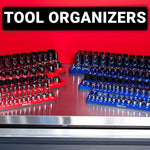
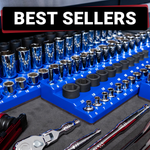






A socket set usually starts out organized for about five minutes. Then one 10mm goes missing, deep sockets get mixed with shallows, and your drawer turns into a metal junk pile that costs you time every single day. If you want to know how to store socket sets in a way that actually holds up in a real shop, home garage, or service truck, the answer is simple: build your storage around speed, visibility, and consistency.
That matters more than most people think. Socket storage is not just about keeping things neat. It affects how fast you work, how often you replace missing pieces, and how much frustration you deal with during routine jobs. A clean layout lets you spot a missing socket instantly, grab the right size without second-guessing, and put it back where it belongs before the next task starts.
How to store socket sets for real-world use
The best storage method depends on where and how you work. A mobile mechanic needs retention and vibration resistance. A dealership tech may care more about drawer speed and fast visual checks. A serious DIYer might need compact storage that fits a smaller box without creating clutter. Different setups work, but the rules stay the same.
First, separate sockets by drive size. Mixing 1/4-inch, 3/8-inch, and 1/2-inch sockets in the same row slows you down and makes the whole system harder to maintain. Keep each drive size in its own dedicated section so your hand goes to the right place automatically.
Next, split standard and metric. Even if you know your sets well, mixed measurement systems create unnecessary searching. It sounds minor until you repeat that search dozens of times a day.
After that, divide shallow and deep sockets. If those two live together, the row gets harder to read and easier to mess up. Keeping them separate gives you a cleaner visual pattern, which is exactly what helps you notice gaps fast.
Finally, think about frequency of use. The sockets you reach for constantly should sit in your easiest-access area, whether that is the top drawer of a service cart, a side tray, or the front half of a toolbox drawer. Less-used specialty pieces can live farther back without hurting workflow.
Choose storage that matches the job
There is no single best answer to how to store socket sets because the right organizer depends on your environment. What works in a fixed shop does not always hold up in a truck or trailer.
Socket rails
Socket rails are one of the most efficient options if you want compact storage with clear size grouping. They keep sockets lined up, easy to sort, and easy to pull into a drawer, cart, or workbench tray. They are especially useful when space is tight and you need to fit a lot of sockets into a small footprint.
The trade-off is access style. Some rails are better for retention, while others favor quick removal. If your tools move around all day, stronger retention matters. If you mostly work from a stationary box, quick grab-and-return may matter more.
Socket trays and organizers
Trays work well when you want instant visual size recognition. A molded or labeled organizer makes it obvious what belongs where, and missing sockets stand out right away. That is a major advantage if you are trying to keep a set complete over the long haul.
Trays also tend to be faster for drawer organization because everything stays laid out in a readable pattern. The downside is that trays can take up more drawer space than rails, so they are best when visibility matters more than maximum density.
Foam and custom drawer systems
If you want a cleaner, more controlled layout, foam or custom-fitted drawer systems can be the best move. They give every socket a fixed home and create a professional setup that is easy to maintain. For busy mechanics, that means less hunting and less wasted motion.
This approach does take more planning. If your collection changes often, custom cutouts may need updates. But if you already know your core setup and want a serious organization system, it is hard to beat.
The smartest drawer layout for socket storage
A lot of toolboxes have enough space for sockets, but the layout works against the user. The issue is not capacity. It is arrangement.
Set your drawer up so the most-used drive size is closest to your natural reach. For many mechanics, that is 3/8-inch. Place shallow sockets before deep if that matches how you usually work, or reverse it if deep sockets are more common in your day-to-day jobs. The point is consistency. Once the pattern is set, do not keep changing it.
Run sizes in clean numerical order with labels visible. If your organizer does not clearly show sizing, mark it. You should not have to pick up three sockets to find the one you want.
Leave a little room for your hands. Packing a drawer too tightly looks efficient at first, but it slows you down if you cannot grab tools cleanly. Dense storage has its place, especially in smaller boxes, but speed still matters.
How to store socket sets in a mobile setup
Mobile storage has one extra challenge: movement. A socket organization system that looks great in the shop can turn into a scrambled mess after a few miles on the road.
Retention matters more in trucks, vans, and service carts that roll across uneven surfaces. Sockets need to stay locked in place when the box shifts, brakes, or hits vibration. Organizers with secure clips, strong holders, or fitted tray systems usually perform better than loose layouts in these environments.
Low-profile storage also helps. Tall stacks and loose piles are more likely to shift. A flatter layout inside a drawer is easier to manage and easier to inspect quickly between jobs.
If you work mobile, keep only the sockets you actually use most often in prime space. Carrying every possible piece in your fastest-access area sounds good until it creates clutter. Build your setup around the work you do every week, then store less-used pieces in a secondary compartment.
Mistakes that ruin socket organization
The biggest mistake is relying on memory instead of a system. You might know where everything is today, but that falls apart fast when the pace picks up, another person borrows a tool, or you are halfway through a long repair.
Another common mistake is keeping sockets in the blow-molded case they came in and calling it done. Those cases are fine for transport or occasional use, but they are usually slower in a daily workflow. Opening, sorting, and reseating each socket takes longer than a good drawer-based system.
Overstuffing one drawer is another problem. When sockets, extensions, adapters, swivels, and bits all get dumped together, nothing stays organized for long. Keep socket storage dedicated if you can. If you cannot, at least divide accessories into their own clear zones.
And then there is the simplest mistake of all: not putting tools back immediately. Even the best organizer will fail if sockets get left on a fender, bench, or cart shelf after every job. Storage only works when return is part of the routine.
Build a system you can maintain
The best socket storage setup is not the one that looks perfect on day one. It is the one you will still use six months from now when the shop is busy and your patience is thin.
That means choosing a layout that feels natural. If you prefer left-to-right size progression, stick with it. If you want metric on one side and SAE on the other, keep that rule. If color coding helps you move faster, use it. Good organization should reduce decisions, not create new ones.
It also helps to audit your setup once in a while. If certain sockets are constantly out of place, the storage may be wrong for your workflow. If a row stays untouched for months, move it out of prime space. A strong system is not rigid. It is practical.
For mechanics and serious DIY users, organization is part of performance. A well-planned socket drawer saves time on every job, protects your tools, and cuts down on the small delays that wear you out over a long day. Olsa Tools has built a lot of its lineup around that exact reality - because when every tool has a home, the work moves faster.
Store your sockets so the right one is easy to see, easy to grab, and easy to return. That is the kind of setup that keeps paying you back every time the drawer opens.